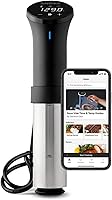
Anova Precision Cooker vs Pro: Which to Buy? (November 2026)
Pick the Anova Precision Cooker Pro for big batches and long cooks; pick the 2.0 for everyday meals in a normal pot. In this Anova Precision Cooker vs Pro comparison, water volume and cook length decide it more than the wattage number.
On this page (9 sections)
Pick the Anova Precision Cooker Pro for big batches and long cooks; pick the 2.0 for everyday meals in a normal pot. In this Anova Precision Cooker vs Pro comparison, water volume and cook length decide it more than the wattage number.
The Pro runs at 1200 watts and heats up to 100 liters in a covered container. The 2.0 runs at 1000 watts with an 8 liters per minute flow rate, which suits a stock pot on a weeknight.
Both clamp to your own pot, both use the Anova app, and both hold a set temperature precisely. The gap is in how much water each one can move and how long it can run without a break.


Anova Precision Cooker vs Pro: the quick verdict
The Pro is the better cooker for anyone who cooks in volume or runs long cooks. Its 1200 watts and 100-liter covered capacity mean a full cooler of short ribs reaches temperature and stays there.
The 2.0 is the better buy for most households. It costs less, weighs less and clamps to the stock pot you already own, which is what most weeknight sous vide actually looks like.
Here is the short version. Buy the Pro if you batch cook, host often or plan multi-day cooks.
Buy the 2.0 if you cook one or two portions at a time and want to start without buying a container.
The rest of this comparison breaks down the points that actually change the choice: power and capacity, build and durability, app use, and what each one needs on your counter.
The two cookers side by side
The Pro is the heavier tool with a stainless steel body; the 2.0 is the lighter, cheaper home unit. Neither one is a bad cooker, but they are built for different workloads.
The table below lines up the specs that matter for choosing between them. For a deeper look at how the Pro stacks up against the newer 3.0, see our Anova Precision Cooker Pro vs 3.0 breakdown.
| Product | Best for | Power | Capacity | Body | Our score |
|---|---|---|---|---|---|
| Anova Precision Cooker Pro | big batches | 1200 watts | Up to 100L covered | Stainless steel, IPX-7 | 8.7 |
| Anova Precision Cooker 2.0 | everyday cooking | 1000 watts | Plastic and stainless steel | 8.2 |
The Pro measures about 13.8 inches tall and weighs 3 pounds. The 2.0 is about 12.8 inches tall and weighs 2 pounds.
Those differences matter when you store the cooker in a drawer between uses.
Both have a lower temperature rating of 32 °F and an upper rating of 197 °F. That top end covers the range most sous vide recipes call for, from a low 130 °F for steak to a 165 °F bath for poultry.
Both carry a 2 year manufacturer warranty, and the Pro runs on 120 volts while the 2.0 is listed at 110 volts.
The 2.0 has a wider 3.07-inch body, while the Pro is slimmer at 2.4 inches deep. That slimmer shaft matters when you clip the cooker to a crowded pot or want more room between the circulator and the food bags.
What each cooker includes
The Pro ships with the precision cooker and a clamp. The 2.0 also attaches to any stock pot or container with an adjustable clamp.
Neither one includes a container or a vacuum sealer. You supply the pot or tub and the bags, which is normal for a circulator.
Reading the listed capacities
Anova lists the Pro's cooking volume as up to 100 liters in a covered container. The 2.0's spec sheet lists a capacity of 8 liters, which matches its 8 liters per minute flow figure rather than a tub size.
That is the clearest way to compare them on paper. The Pro is rated to heat a very large bath, while the 2.0's figure describes how fast it moves water through a home-sized pot.
Power and water capacity decide most buyers
The Pro's 1200 watts and 100-liter covered capacity beat the 2.0's 1000 watts for large volumes. If your cooks fit in a stock pot, that extra power buys you little.
Sous vide works by moving water past the food at a steady temperature. More water means more thermal mass and a longer climb to the set point.
That is where the Pro's extra watts earn their keep.
The 2.0 moves water at 8 liters per minute. That flow is enough to keep a home-sized pot even from top to bottom, which is what even cooking depends on.
Both models top out at the same 197 °F. Neither one gets hotter than the other, so the difference is how much water each can hold steady at a given temperature, not the ceiling it reaches.
When the extra capacity matters
The Pro is the clear pick for a covered container up to 100 liters. Think a full cooler of chicken thighs for a party, a large batch of yogurt, or a whole pork shoulder in a big tub.
It is also the pick when you want to cook several bags at once. More water means more room to space the bags so water flows between them.
When 1000 watts is plenty
The 2.0 suits a normal stock pot holding a few steaks, a couple of chicken breasts or a dozen eggs. In that volume, 1000 watts reaches temperature quickly enough for a weeknight.
If you cook for one or two people most nights, the Pro's capacity sits unused. You pay for headroom you rarely touch.
Build quality and durability over time
The Pro has a stainless steel body rated IPX-7 and drop tested; the 2.0 has a plastic and stainless steel body that Anova calls water resistant. The Pro is built for harder use.
Anova says the Pro can run for a minimum of 10000 hours straight without shutting down. That rating is the real selling point for anyone planning multi-day cooks like a long brisket or a 48-hour short rib.
The 2.0 is not rated for that workload. It is a home cooker, and its plastic body reflects that.
It still holds temperature precisely, which is the core job.
Long cooks and the Pro's rating
A 24-hour or 48-hour cook puts steady hours on the motor and heater. The Pro's 10000-hour continuous rating means Anova built it for exactly that kind of use.
The stainless steel body also helps in a busy kitchen. Splashes, spills and the occasional knock are part of cooking, and the Pro is rated to handle being dunked or dropped.
Everyday use and the 2.0's limits
For a 1 to 4 hour cook, the 2.0's build is fine. Most home sous vide sits in that window, from a 1-hour salmon to a 4-hour chicken.
The plastic body is lighter and easier to store. That is a real plus if the cooker lives in a cabinet and comes out a few times a week.
If you want to see how the Pro compares with the newer 3.0 on build and features, our Anova Precision Cooker 3.0 review covers its strengths and limits.
App control and ease of use
Both cookers use the Anova app for recipes and remote monitoring, so the software is not a tiebreaker. The app gives you thousands of free recipes and lets you watch a cook from your phone.
You can also run either cooker manually with the built-in controls. That matters if you don't want to depend on a phone in the kitchen.
Both units list app control as their control method, and both connect over Wi-Fi on the 2.4 GHz band with iOS and Android support. Either way you get the same recipe library from Anova's test kitchen.
The 2.0's app listing mentions a paid subscription for extra guides and cook history at 1 dollars.99 a month or 9 dollars.99 a year, with a two week free trial. The core recipes and remote control stay free either way.
Setting up either cooker
Clamp the circulator to the side of your pot or container, fill with water, and add your sealed food. Set the temperature and time on the device or in the app.
The Pro's larger body needs a pot deep enough to hold it at the water line. The 2.0 fits smaller pots, which helps in a compact kitchen.
If you are still deciding between the 2.0 and the newest model, our Anova Precision Cooker 2.0 vs 3.0 post explains what changed.
Container and bag setup for each
The Pro benefits from a covered container to reach its rated capacity, while the 2.0 works in an ordinary stock pot. Plan for the container before you pick the cooker.
The Pro's 100-liter figure assumes a covered container. A lid holds in heat and cuts evaporation on long cooks, which matters when a cook runs past a day.
The Anova 12 L Cooker Container is the smaller Anova option, with a silicone lid, a removable rack and a raised base. It is a sensible match for the 2.0 and for smaller Pro cooks.
If you plan to run the Pro in a cooler, a lid is still worth having. Anova's own container tops out at 185 °F and includes the rack and lid as a set, so it covers the water-loss problem rather than leaving you to improvise foil.
For sealing food before it goes in the water, a vacuum sealer keeps bags tight and stops floating. The POTANE model has 8-in-1 presets and a sloping top that helps keep juice out of the seal on moist foods.
If you are weighing Anova against another brand, our Inkbird vs Anova sous vide comparison covers the differences.
Who should buy the Pro
Buy the Pro if you cook for groups, run cooks longer than a day or want a circulator built for heavy use. Its stainless steel body, IPX-7 rating and 1200 watts are aimed at that workload.
It also suits anyone who plans to use a large covered container, such as a cooler, for batch cooking. The 100-liter covered capacity is the reason to pay more.
Skip it if you cook single portions in a stock pot. You would be carrying a heavier, pricier tool for work the 2.0 already handles.
The Pro is also a reasonable choice for a serious home cook who wants one circulator that will last through years of regular use. The 10000-hour continuous rating speaks to that intent.
Who should buy the 2.0
Buy the Anova Precision Cooker 2.0 if you cook normal home portions and want to start with the pot you own. It clamps to any stock pot, weighs 2 pounds and costs less than the Pro.
It is the better first sous vide cooker for most people. You get precise temperature control, app recipes and remote monitoring without paying for capacity you won't use.
Choose the Pro later if your cooking grows into larger batches. For now, the 2.0 covers steaks, chicken, fish, eggs and vegetables at home scale.
One caveat: the 2.0's plastic body and lighter build suit home use, not a busy kitchen. If the cooker will see near-daily use or long cooks, the Pro is the more durable pick.
The verdict
For most readers, the Anova Precision Cooker 2.0 is the right buy; the Pro wins for large batches and long cooks. The Anova Precision Cooker vs Pro choice comes down to how much water you cook in and how long you leave it running.
Pick the Pro if you batch cook, host often, use a large covered container or plan cooks that run past 24 hours. Its 1200 watts, 100-liter covered capacity and 10000-hour continuous rating are built for that.
Pick the 2.0 if you cook a few portions at a time in a stock pot and want precise results without the extra weight and cost. It clamps to what you own and uses the same Anova app.
Either way, a covered container and a vacuum sealer complete the setup. For the wider lineup, our Anova Precision Cooker Pro vs 3.0 post covers the newest model.
Frequently asked questions
Is the Anova Pro worth it over the standard Precision Cooker?
Yes if you cook in large containers or run cooks longer than a day. The Pro heats up to 100 liters in a covered container and is rated for 10000 hours of continuous use, so it suits batch cooking and long brisket or pork shoulders.
For one or two portions in a stock pot, the 2.0 does the job.
Can the Anova Precision Cooker 2.0 handle a big pot?
It works best in a normal stock pot with a moderate water volume. Its 1000 watts and 8 liters per minute flow are built for home-sized batches, not a full cooler.
If you regularly cook for a crowd, the Pro's 1200 watts are the safer match.
What does IPX-7 mean on the Anova Pro?
It means the circulator is rated to survive being dunked in water, and Anova says the stainless steel body is drop tested too. That rating suits a busy kitchen where splashes and knocks happen, but it is not a reason to submerge the unit during normal use.
Do both Anova models use the same app?
Yes, both connect to the Anova app, which holds thousands of free recipes and lets you monitor a cook from your phone. The app also gives you manual control from the cooker itself if you prefer not to use your phone.