Can You Use a Sous Vide Cooker in a Metal Pot?
Yes, you can use a sous vide cooker in a metal pot, as long as the pot is deep enough to meet the cooker's minimum water depth and wide enough for the clamp to grip. Metal heats and loses heat faster than plastic, so expect more water evaporation and a bit more temperature swing on long cooks.
On this page (9 sections)
- Can you use a sous vide cooker in a metal pot?
- How deep does a metal pot need to be for a sous vide cooker?
- How wide should the pot be for good water circulation?
- What changes when the pot is metal instead of plastic?
- Will the clamp fit my metal pot?
- Can you use a sous vide cooker in a metal pot on the stove?
- Is a metal pot safe for long or overnight cooks?
- Which cooker works well in a metal pot?
- What should you know before you buy supplies?
Yes, you can use a sous vide cooker in a metal pot, as long as the pot meets the cooker's minimum water depth and the clamp can grip the rim. A metal pot works as a water bath, but its thin walls lose heat faster than plastic, so plan for more evaporation and closer temperature swings on long cooks.
Metal is the most common pot people already own, so it's a fair question before buying a circulator. The answer comes down to three checks: depth, width and how well the clamp holds.
Can you use a sous vide cooker in a metal pot?
Yes, a metal pot is a valid water bath for a wand-style immersion cooker. Stainless steel, aluminum and enameled pots all hold water and conduct heat well, so the cooker's heater and impeller do their normal job.
The catch is the pot's shape. A tall stockpot gives you depth but little floor space for food, while a wide Dutch oven gives you space but may not be deep enough.
Match the pot to what you plan to cook before you fill it.
If you're still deciding between a pot and a dedicated tub, our guide to whether you can sous vide in a pot covers the trade-offs. A metal pot is the simplest start because most kitchens already have one.
How deep does a metal pot need to be for a sous vide cooker?
The water must reach the cooker's minimum fill line once the food and any rack are inside. Anova, for example, states a minimum water depth for its Precision Cooker 3.0, so check that figure before choosing a pot.
Water depth also sets what you can cook. A pot that's 8 inches deep holds enough water for a steak or chicken breast in a bag, but a large roast or a whole chicken needs more room.
The bag must sit fully under the surface with space for water to flow around it.
Don't fill to the brim. Leave a couple of inches of headroom so the water can move without splashing over the rim, and so the cooker's intake stays submerged.
How wide should the pot be for good water circulation?
A pot needs enough floor space for water to move around the bag. Circulation is what keeps the temperature even, and a narrow pot squeezes the bag against the walls and slows the flow.
A pot that's 8 to 10 inches across the base handles most single-bag cooks. Two bags side by side or a large piece of meat need more width.
A rack or a weighted clip keeps bags from blocking the cooker's intake.
Width matters most for the clamp. The cooker hangs on the rim, so a pot that's too narrow tips or lets the impeller rub the wall.
Check that the pot's opening is at least as wide as the cooker's clamp needs.
What changes when the pot is metal instead of plastic?
Metal conducts heat faster, so the pot warms quickly but also sheds heat through its walls and base. The water bath holds its set temperature, but the cooker cycles more often to replace what escapes.
That means more evaporation, especially on cooks longer than a couple of hours. Metal pots also get hot all over, so set yours on a heat-safe surface with a trivet and keep handles clear of the edge.
Plastic tubs insulate better and are lighter to move. A dedicated container with a fitted lid solves both evaporation and clamp fit, which is why many cooks upgrade later.
Our roundup of the best containers for sous vide cooking compares the main options.
How much extra water will a metal pot lose?
Expect a noticeable drop over a long cook, more than you'd see in an insulated tub. On a 6 to 12 hour cook, check the water line every few hours and top up with hot water so the level stays above the minimum.
A lid or foil cover cut around the cooker cuts evaporation sharply. Leave a small gap so steam can escape and the cooker's display stays readable.
Why does the cooker cycle more in a metal pot?
The cooker's thermostat reacts to the water temperature, and a metal pot pulls heat away faster through its walls. The heater runs longer and more often to hold the set point, which uses a little more power.
This cycling is normal and doesn't hurt the food. The water still stays within a tight band around your target, which is what sous vide relies on.
For a longer explanation of the water bath method, see the best sous vide cookers for home use.
Will the clamp fit my metal pot?
It depends on the rim. The Anova Precision Cooker 3.0 uses an adjustable clamp that fits most pots deep enough to meet its water depth.
Thick rolled rims and flared or sloped walls give the clamp less to bite.
Test the fit before you fill the pot. Hang the cooker on the rim and press down gently.
If it slides or tips, choose a different pot or add a non-slip pad under it.
Keep the cooker's lower end off the pot floor. The intake and outlet need clear water around them, and the stainless skirt should sit in the water without resting on the base.
Can you use a sous vide cooker in a metal pot on the stove?
Yes, but only as a water bath, not over a lit burner. Run the circulator in the pot as usual, with the stove off.
If you need to warm the water first, do it on the stove and then move the pot to a heat-safe counter before starting the cooker.
Never leave a burner on under a circulator. Direct heat under a metal pot can overheat the water and damage the cooker's plastic housing.
The circulator does the heating once it's running.
For a pot that's too tall to move easily, fill it with hot tap water instead. That gets the bath close to temperature before the cooker takes over.
Is a metal pot safe for long or overnight cooks?
It's workable for long cooks with a cover and a water check, but plastic is the safer habit for overnight. Metal loses heat and water faster, so an uncovered pot can run low before morning.
Set the pot on a stable, heat-safe surface away from the edge. Keep the cord out of reach of children and pets and away from water on the floor.
Check the water level and the cooker's position right before you go to bed.
For very long cooks, a dedicated container with a hinged lid stays more stable. The EVERIE 12 Qt container reduces evaporation with a fitted lid that opens without lifting off.
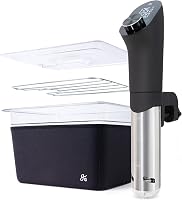
Its lid is cut for Anova models including the Precision Cooker 3.0. For an all-in-one setup with a rack and insulated sleeve, the Greater Goods 12 Qt kit keeps food submerged and slows heat loss.
Which cooker works well in a metal pot?
A wand-style immersion cooker with an adjustable clamp is the right fit. The Anova Precision Cooker 3.0 uses a clamp that fits nearly any pot deep enough to meet its minimum water depth, so it's the easiest match for a stockpot you already own.
It's rated at 1100 watts and covers 32°F to 197°F. That range handles everything from a low-temperature steak to vegetables, and the touch screen shows time and temperature at a glance.
A metal pot plus this cooker is the shortest path from buying to cooking.
What should you know before you buy supplies?
A metal pot gets you started, but a few extras make it easier. A bag clip or rack keeps food under the water, and a lid or foil cover slows evaporation.
That's the core of any sous vide supplies list.
If you plan to cook often, a dedicated container with a fitted lid is the upgrade worth making first. Otherwise, measure your pot's depth and rim before you buy a cooker and you can start cooking with what you own.
So if you're wondering whether you can use a sous vide cooker in a metal pot, the answer is yes for most everyday cooks. Pick a pot deep enough to meet the fill line, check that the clamp grips the rim, and cover the top on longer cooks.
Start with the pot you have and upgrade to a fitted container when evaporation becomes a chore.
Frequently asked questions
Does a metal pot make sous vide cook faster?
No. The water bath reaches and holds the set temperature the same way in metal or plastic.
Metal only changes how quickly the outside of the pot loses heat, so the cooker works a little harder to hold the set temperature.
Can the cooker's metal skirt touch the pot?
The stainless steel skirt on the cooker's lower half can rest against a metal pot without a problem. Just keep the skirt's intake and outlet clear so water flows freely and the heating element isn't blocked by the pot wall.
How do I stop a metal pot from losing so much heat?
Cover the pot with foil or a lid that fits around the cooker, and keep the pot out of drafts and off cold countertops. Some cooks wrap a towel around the outside, kept clear of the cooker and any open flame.
Why does the clamp slip on my metal pot?
The clamp needs a rim thin enough to grip and a wall straight enough to sit flat against. Rims that are rolled thick, flared or sloped give the clamp less to hold, so the cooker tips or drifts during the cook.