How Much Does a Sous Vide Cooker Cost?
Most sous vide cookers cost between about 60 dollars and 250 dollars, and the sweet spot for a first circulator is roughly 100 dollars to 200 dollars. Budget models start near 60 dollars, mid-range units run 100 dollars to 200 dollars and premium Wi-Fi cookers with bigger motors go above that.
On this page (8 sections)
- How much does a sous vide cooker cost at each tier?
- What do you get in the budget price range?
- What pushes the price into the mid-range?
- Why do premium sous vide cookers cost more?
- What hidden costs should you add to the sticker price?
- Does a more expensive cooker cook better?
- How should you set a realistic budget?
- What is a fair price to pay?
How much does a sous vide cooker cost? Most home circulators cost between about 60 dollars and 250 dollars.
Budget models start near 60 dollars, mid-range units with app control run 100 dollars to 200 dollars and premium Wi-Fi cookers go higher.
The number you pay depends on wattage, temperature control and app features more than on brand name. A cheap cooker that holds temperature steadily can turn out excellent food in a small pot.
How much does a sous vide cooker cost at each tier?
Budget cookers cost roughly 60 dollars to 100 dollars, mid-range units 100 dollars to 200 dollars and premium models 200 dollars and up. Most first-time buyers land in the middle tier because it balances heating power, accuracy and app features.
Wattage is the clearest price signal. An 800-watt unit heats a small pot fine; a 1,100-watt model recovers heat faster when you add cold food or open the lid.
App control, a display and removable parts also push the price up.
A sous vide cooker is a simple machine at heart: a heating element, a circulator and a thermostat. What separates a cheap unit from an expensive one is how much power sits behind the element and how much control the thermostat gives you.
That's why two similar-looking cookers can sit in different price tiers.
For a wider look at what each tier offers, see our roundup of the best sous vide cookers for home use.
What do you get in the budget price range?
Budget cookers give you accurate temperature and a basic clamp for small to medium pots. They skip Wi-Fi, touch screens and premium finishes, and that's the trade you make for a lower price.
The Anova Precision Cooker Nano 2.0 is a clear example. It runs 800 watts and holds temperature to within 0.1°C (0.2°F) according to Anova, with a fixed clamp that attaches to a stock pot or container.
It's 12.8 inches tall and weighs 1.7 lb, so it stows in a drawer.
Its app controls time and temperature or you can set both on the cooker itself. A 99-hour cook time covers long braises and big cuts.
What the Nano gives up is heating speed in a large bath and a display you can read at a glance. For a pot that feeds one or two people, neither matters much.
For more options at this tier, compare the best cheap sous vide cookers that still hold temp.
What pushes the price into the mid-range?
Mid-range cookers add more heating power, better connectivity and easier cleaning. You pay for speed and convenience, not for a different cooking technique.
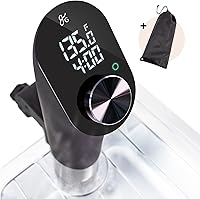
The Anova Precision Cooker 3.0 shows what the extra money buys. It's 1,100 watts in stainless steel, with dual-band Wi-Fi for better connectivity and a two-line touch screen that shows time and temperature at a glance.
An adjustable clamp fits nearly any pot deep enough for the minimum water depth.
The removable stainless steel skirt twists off and goes in the dishwasher, which matters if you cook often. Its 16-liter capacity suits larger batches than the Nano's 800-watt setup handles easily.
This is the tier where most home cooks stop.
What does the dual-band Wi-Fi actually do?
Dual-band Wi-Fi connects on both 2.4 GHz and 5 GHz networks. Many home routers run 5 GHz for speed and 2.4 GHz for range, so a cooker that handles both gives you a better shot at a stable link wherever your kitchen sits.
The Nano 2.0 controls by app too, but the 3.0's dual-band radio and touch display are the two upgrades you feel day to day. If you plan to cook while you're out, the stronger connection is worth the step up in price.
Why do premium sous vide cookers cost more?
Premium cookers cost more because of larger motors, stronger connectivity and better materials. Some also add guided cooking features or built-in timers and alerts.
Those extras help when you cook several times a week or want remote control from another room. For occasional small batches, the extra cost rarely changes the result on the plate.
A more expensive cooker doesn't cook food to a different doneness. It heats water and holds a set point, and so does a cheap one.
The premium part is the finish on the housing, the size of the motor behind the impeller, and how many ways the cooker lets you set and monitor the bath. See the best top-rated sous vide machines for how top models compare.
What hidden costs should you add to the sticker price?
Budget for bags, a container and clips on top of the cooker itself. These extras often add a meaningful amount to the total, and skipping them makes the first cook harder.
- Bags or rolls: vacuum-sealer bags cost more than zip-style freezer bags. Zip bags work for short cooks; a vacuum sealer suits long ones.
- Container: a dedicated plastic container with a lid costs extra. A large stock pot you already own is free and works if it meets the minimum water depth.
- Rack or clips: these keep bags from floating and stop them touching the sides. Many cookers include clips; racks usually cost a little more.
A small kitchen may only fit a compact unit. Our guide to the best small sous vide cookers for tight kitchens covers sizes that fit drawers and narrow counters.
The container is the piece most people underestimate. The Precision Cooker 3.0 has a 16-liter capacity, and its adjustable clamp fits nearly any pot deep enough.
The Nano's fixed clamp fits a stock pot or container, so neither needs a special tub. If you already own a deep stock pot, skip the container line and put that money toward bags instead.
Does a more expensive cooker cook better?
Not always. Temperature accuracy matters more than price for most foods.
A cooker that holds a steady bath turns out the same steak whether it cost a little or a lot.
What you get for more money is speed and convenience. Higher wattage heats a big pot faster and recovers quicker after you add food.
Wi-Fi and app recipes save planning time. A removable skirt makes cleaning easier.
Buy for the volume you cook. A 1,100-watt model in a 16-liter bath is overkill for one chicken breast.
An 800-watt unit struggles to hold temperature in a very large pot. Match the watts to the water you'll actually heat.
Both Anova cookers run from 32°F to 197°F and hold accuracy to within 0.1°C. The gap shows up when the bath gets big and cold food goes in.
That's when the 1,100 watts of the 3.0 pulls ahead of the 800-watt Nano.
How should you set a realistic budget?
Set your budget around batch size and cooking frequency, not around the highest price you can afford. Pick a number that leaves room for bags and a container, then buy the cooker that fits.
If you cook for one or two people
A compact 800-watt cooker like the Nano 2.0 covers most meals. It heats a stock pot quickly and stores in a drawer.
Put the savings toward a vacuum sealer if you plan long cooks. Its 1.7 lb weight and 2.2-inch width make it easy to park next to the whisk and ladle between uses.
If you cook for a family or in large batches
Spend on wattage. The 1,100-watt Precision Cooker 3.0 holds temperature better in a full 16-liter bath and recovers faster when you add cold food.
The touch display and dual-band Wi-Fi are useful bonuses.
If you want smart features and app recipes
Both Anova models connect to the Anova App for free, so you can control time and temperature from your phone. The app's subscription adds chef recipes and cook history for a small monthly fee.
Anova lists it at 1 dollars.99 a month or 9 dollars.99 a year with a two-week free trial, and you can cancel anytime. It's a running cost, not a one-time one, so factor it in only if the chef recipes and saved cook history are things you'll use.
What is a fair price to pay?
For most homes, a cooker in the 100 dollars to 200 dollars range is fair value. It gives you steady temperature, useful wattage and app control without paying for extras you won't use.
If you cook small batches, a budget unit near 60 dollars to 100 dollars does the job. If you host often or cook large cuts, the extra money for 1,100 watts is easy to justify.
Avoid paying premium prices for smart features you won't touch.
That's the practical answer to how much does a sous vide cooker cost: budget for the cooker plus bags and a container, and match the watts to the water you'll heat. Compare both models in our home-use sous vide roundup before you buy.
Frequently asked questions
How much does a sous vide cooker cost on average?
Most home circulators land between about 60 dollars and 250 dollars. A solid mid-range model with an app, decent wattage and accurate temperature control typically costs 100 dollars to 200 dollars, while budget units start near 60 dollars and premium Wi-Fi cookers run higher.
Is a cheap sous vide cooker worth it?
Yes, if it holds temperature well. Lower wattage means slower heating and less ability to hold heat in a big pot, so a cheap unit suits small batches and one or two people.
Spend more when you cook large cuts or run the bath for many hours.
Do I need to budget for extras like bags and a container?
Yes. Bags or rolls, a dedicated container or a pot you already own, and a rack or clips are part of the real cost.
Vacuum sealer bags cost more than zip-style bags.
A large pot you already have keeps the total down.
Does wattage affect the price of a sous vide cooker?
It often does. Higher wattage models like 1,100 watts heat water faster and recover temperature quicker, and they usually cost more than 800-watt units.
Wattage matters most for large water volumes and long cooks, less for small everyday batches.
What is the most I should spend on a sous vide cooker?
For most home cooks, 200 dollars or so covers everything needed: app control, strong wattage and accurate temperature. Going above that buys extra connectivity or build materials.
Spend more only if you cook often and want the extra convenience.