Anova Culinary Nano Sous Vide Review: Worth It? (November 2026)
The Anova Precision Cooker Nano 2.0 is the sous vide cooker to buy first if you want a small, simple unit for chicken, eggs and steak. Its 800 watts and 32 to 197 °F range cover everyday cooks, and the fixed clamp fits any stock pot.
On this page (8 sections)
The Anova Precision Cooker Nano 2.0 is the sous vide cooker to buy first if you're new to the method and want something small. This Anova Culinary Nano sous vide review weighs its 800 watts, its 32 to 197 °F range and its drawer-sized body against the cooks most beginners actually make.
It's the best fit for a first cooker, but not the fastest or the hottest option here. If you want speed or high-heat vegetable work, the two Breville machines in this review do more.
The Anova Nano at a glance
The Nano is a compact immersion circulator that holds water temperature within 0.2 °F. It attaches to a stock pot, heats and circulates the water, and lets you cook chicken, fish, eggs and steak to an exact doneness.
Anova rates it at 800 watts and a 32 to 197 °F range.
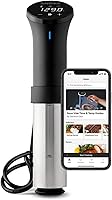
Anova Precision Cooker Nano 2.0: Best for beginner home cooks

- 800 watts
- 32 to 197 °F range
- 12.8 in tall
- Fixed clamp
- Free Anova app
A compact cooker that holds a steady water temperature and stows in a drawer. The app is optional, so it works as a standalone unit too.
Pros
- Fits any stock pot with its fixed clamp
- Drawer-sized at 12.8 in tall
- Works without the app
- Two year warranty
Cons
- Caps out at 197 °F
- 800 watts heats more slowly than the 1,100 watt cookers here
The key facts are simple: it's 12.8 in tall, weighs 1.7 lb and runs for up to 99 hours. The fixed clamp means it stays put on a pot without a separate bracket, which matters when you're starting out and don't want extra parts.
Our score of 8.6 weighs the specs and features against what a beginner needs: a steady temperature, easy controls and a small footprint. It loses points only where the faster and hotter cookers below do more.
The build is plastic rather than stainless steel, which keeps the weight at 1.7 lb and the price tier lower than the metal-bodied machines here. Anova includes just the cooker in the box, so the pot, bags and any rack come from your own kitchen.
The model number is AN400-US00 and it runs on standard 120 volt power, so a normal counter outlet is enough. It also ranks seventh in its category on the sales charts, which tells you how many people start here.
Who the Anova Nano suits
Buy the Nano if you're learning sous vide on a counter that's already full. At 12.8 in tall and 1.7 lb, it stows in a kitchen drawer next to the whisk and ladle, which makes it easier to keep within reach than a taller, heavier unit.
It's also the right pick if you'd rather not depend on a phone. You can set time and temperature on the cooker itself.
The free app is there when you want guided recipes or a notification when food is ready, and the paid tier adds chef content and saved recipes. Neither is required.
Skip it if your cooking leans toward vegetables that need higher heats or if you cook for a group in a large container. The 197 °F cap and 800 watts are the reasons to look at the alternatives.
One more group it fits: people who cook for one or two. The fixed clamp grabs a stock pot, and a modest pot of water heats faster than a large bath, so the lower wattage matters less when the vessel is small.
If you usually cook two chicken breasts or a few eggs at a time, the Nano's size stops being a compromise and starts being the point.
The specs that matter in daily use
Temperature accuracy is the spec that decides whether sous vide works. Anova states +/- 0.1 °C (0.2 °F) accuracy on the Nano, and that tight hold is why a chicken breast comes out the same every time instead of drifting toward dry or underdone.
The 32 to 197 °F range covers the cooks a beginner makes most. Chicken, fish, beef, lamb, pork and eggs all sit well inside it.
The top end stops short of the higher heats some vegetable recipes use, so plan around that. The 32 °F floor is the cold end, useful for chilling and defrosting setups as well as cooking.
Wattage tells you how fast the water comes up to temperature. At 800 watts the Nano is the lowest of the three here, so it takes longer to heat a full pot than the 1,100 watt machines.
In a small or half-full pot the gap narrows, because there's less water to bring up to heat.
The 99 hour maximum cook time is more than enough for long braises and overnight cooks. A 24 hour cook for a tough cut or a long vegetable bath fits easily inside it.
The 12.8 in height and 1.7 lb weight are what make it easy to store. The fixed clamp fits stock pots and other containers without a separate mount.
Setting it up and cooking your first meal
Set up is short: fill a pot, clamp the cooker on, bag the food and set time and temperature. Attach the Nano to the side of a stock pot filled with water, plug it in and set your target on the cooker or in the app.
The water level needs to sit between the marked minimum and maximum on the shaft, so the heater stays covered without spilling when the bag goes in.
Bag the food in a sealable bag and lower it into the water once the cooker reaches temperature. The water needs to circulate around the bag, so don't pack the pot so full that the bag sits against the side, because a bag pressed flat against the pot wall blocks the flow and leaves one side of the food cooking unevenly.
Then wait. Sous vide doesn't need attention while it cooks, and the app can notify you when food is ready.
That is the main draw of the method for a beginner: you set it and walk away. The 99 hour timer means you can start a long cook in the morning and come back to it later without resetting anything.
For a first cook, start with chicken or eggs. Chicken at a steady low temperature stays juicy in a way pan cooking rarely matches, and eggs let you dial in a runny or set yolk to the degree.
Our Anova Culinary Nano sous vide poultry recipes walk through the temperatures and times that work well on this unit.
Care and cleaning
The Nano is easy to keep clean because its body is plastic and its parts come apart. Unplug it and let it cool before you handle it.
Wipe the outer body with a damp cloth and mild soap. The metal sleeve around the heating element lifts off on this style of cooker so you can clean scale and food residue from the inside, then rinse and dry it fully before putting it back.
Scale builds up fastest if you cook often or live where the water is hard, so check the sleeve every few weeks rather than waiting for a visible crust.
Don't put the head or the electrical parts in water. Clean those with a damp cloth only.
A little white vinegar in a warm water bath breaks down mineral buildup on the sleeve if your water is hard. Soak it briefly, then rinse and dry it before the next cook.
Dry everything before storage. The plastic body and small size mean it stores in a drawer without taking counter space, and the clamp needs a wipe too since it sits in the water during cooks.
Keeping the shaft and sleeve dry between uses is the main thing that keeps the cooker working the same over time.
The trade-offs to know before buying
The 800 watts and 197 °F cap are the real limits of the Nano. Both are fine for most beginner cooks and neither is a flaw in normal use.
They only show up when you push past what the cooker is built for.
A full pot takes longer to reach temperature at 800 watts than with a 1,100 watt machine. That's a wait at the start of each cook, not a problem with the result, but if you cook often and in a big pot, the extra time adds up.
The 197 °F ceiling means some vegetable recipes that call for higher heats aren't a fit. Meat, fish and eggs are unaffected.
If vegetables are your main interest, a cooker that reaches 210 °F makes more sense. Recipes that call for a hard boil or a fast blanch above that line simply need a different machine.
App dependence is a choice here, not a requirement. You can run the Nano without the app, which is more than some app-only cookers offer.
The trade is that the guided recipes and notifications live in the app, so you'll want it installed for the full experience. Anova's app has a free tier with the basic controls and a paid subscription at 1 dollars.99 a month or 9 dollars.99 a year that adds chef recipes and saved cook history.
A two week free trial is included, so you can decide whether the extra content earns its place.
The alternatives in this review
The Nano isn't the only option, and two cookers here do specific jobs better. One wins on speed and one on heat and batch size.
The Inkbird vs Anova sous vide comparison covers how Anova stacks up against its closest rival.
Breville Joule Turbo
The Joule Turbo is the faster cooker for weeknight meals. Its Turbo mode uses algorithms and cloud computing to cook proteins in about half the time, and visual doneness settings run from rare to well done.
Prime Time also gives you a window to serve when you're ready.
The catch is app-only control and a 160 °F top temperature. That limits vegetable work and means you can't run it without a phone.
At 8.9 it scores higher than the Nano for speed, but the Nano is the better first cooker for most beginners. It's also larger at 15 in tall and 2.1 lb, and its stainless steel body costs more to build than the Nano's plastic shell.
PolyScience Breville Commercial CRC-5AC1B Creative Series Sous
The CRC-5AC1B is the cooker for large batches and high heat. It's rated at 1,100 watts and heats water up to 210 °F.
A rugged clamp holds it in containers from stock pots to large food-safe tubs, and touch controls mean no app is needed.
It weighs 4.6 lb and sits in the premium price tier, so it's not the beginner's first buy. Its 9.2 score reflects what it does well: bigger containers, higher heats and standalone controls.
The 6 liter capacity rating points at the batch size it's meant for. Pick it when those matter more than a small footprint.
It also ships with a temperature guide and instruction booklet, which helps if you're stepping up from a small cooker and want reference times for the wider heat range.
Verdict: buy the Anova Nano or skip it?
Buy the Anova Precision Cooker Nano 2.0 if you're a beginner who wants a small, simple cooker for chicken, fish, eggs and steak. It holds temperature within 0.2 °F, works without an app, fits any stock pot and stows in a drawer.
For most first-time sous vide cooks, that's the right set of features at a lower price tier than the Breville machines.
Skip it if you need speed or high heat. Pick the Breville Joule Turbo if you want Turbo mode to cut protein cook times roughly in half and don't mind app-only control.
Pick the PolyScience Breville Commercial CRC-5AC1B if you cook for groups or need the 210 °F top end and touch controls.
The Nano remains the best overall pick for the beginner this review is written for. Its limits are real but narrow, and they only matter once you move past everyday cooks.
To see how Anova fits with the rest of the market, read our roundup of the best sous vide brands and the model to buy from each.
New to the method and still deciding whether it's worth it? Our guide to what is the point of sous vide explains the technique in plain terms before you spend.
If you want a cooker you can run without your phone and store in a drawer, the Anova Culinary Nano sous vide cooker is the one to get.
Frequently asked questions
Is the Anova Nano good for beginners?
Yes. It attaches to any stock pot, holds temperature within 0.2 °F and can be run without the app.
The simple setup and drawer-friendly size make it an easy first cooker for chicken, eggs and steak.
What temperatures can the Anova Nano reach?
The Nano runs from 32 to 197 °F. That covers most meat, fish, egg and vegetable cooks, but it can't reach the higher heats some vegetable recipes call for.
Cooks needing more than 197 °F should choose a 210 °F model.
Does the Anova Nano need the app to work?
No. You can set time and temperature directly on the cooker.
The free app adds guided recipes and cook notifications, and the paid subscription layer adds chef content and saved recipes, but neither is required to cook.
How much water does the Anova Nano hold at once?
The Nano attaches to any stock pot or container with its fixed clamp, so the water you use depends on the pot.
Pick a pot that covers the food and leaves room for the water to circulate.
What is the warranty on the Anova Nano?
Anova backs the Precision Cooker Nano with a two year warranty. Keep your receipt and model number handy, and read the terms for what the coverage includes before you buy.