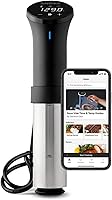
How to Use an Anova Precision Cooker
To use an Anova Precision Cooker, clamp it in a pot of water, set the time and temperature, and lower in a bagged, seasoned food. Wait for the bath to reach temperature, cook for the set time, then sear or chill right away.
On this page (9 sections)
- How do you set up the Anova Precision Cooker before the first cook?
- How do you set the time and temperature?
- What water temperature should you cook at?
- How do you bag and season food for the bath?
- Should you use a pot or a dedicated container?
- How do you run the cook from start to finish?
- How do you connect the app and fix common problems?
- How do you clean and store the cooker?
- Which Anova Precision Cooker should you pick?
Here's how to use an Anova Precision Cooker: clamp it to the side of a pot, fill the pot with water, and set the time and temperature on the touch screen or in the Anova app. Bag your seasoned food, lower it into the heated bath, and cook until the timer ends.
Most of the work is in the setup, not the cook. A stable pot, the right water level and a well-sealed bag do more for the result than any button on the device.
How do you set up the Anova Precision Cooker before the first cook?
Setup takes about five minutes: clamp the cooker to the pot, fill with water, and plug it in. The Anova Precision Cooker 3.0 uses an adjustable clamp that fits nearly any pot deep enough to meet the minimum water depth.
Keep the water between the level marks on the cooker's lower half. Too little water and the heater has nothing to work with; too much and a long cook risks spills or evaporation.
The lower half carries a removable stainless steel skirt. Twist it off to hand-wash or run it through the dishwasher after cooking, which keeps the heating element clear of residue.
Place the pot on a dry, level surface near an outlet, with the cord routed away from the water. Then power on and let the screen wake up.
How do you set the time and temperature?
Set the temperature first, then the time, on the two-line touch screen or in the free Anova app. The 3.0 shows both readings at once, so you can glance at the bath without opening anything.
Press the temperature control and adjust to the target, then set the cook time. The cooker heats the water and holds it at that setting while the countdown runs.
You can also send a recipe straight to the cooker from the app, including the recipes in the paid subscription tier. The free app covers direct time and temperature control, which is enough for everyday cooking.
Let the bath reach temperature before you add food. Dropping cold food into a cold bath stretches the preheat and makes timing harder to judge.
What water temperature should you cook at?
Pick the temperature for the doneness and texture you want, then use time to set how firm or tender the result gets. Sous vide holds a fixed temperature, so the bath itself is the control.
Tender cuts like steak and fish do well in the 125°F to 140°F range for medium-rare to medium results. Poultry, pork and root vegetables need higher settings, and tough cuts need long cook times to soften.
Anova's app recipes give starting times and temperatures for common dishes. Follow a trusted time and temperature table for the cut in front of you, and keep a note of what you liked so you can repeat it.
For a broader reference, our guide to sous vide times and temperatures walks through the settings by food type.
How do you bag and season food for the bath?
Season the food, seal it in a bag, and push out as much air as you can before it goes into the water. Air pockets lift the bag and stop heat reaching the surface evenly.
A vacuum sealer works, but it isn't required. With zipper bags, lower the bag slowly into the bath with the top open.
Water pressure pushes the air out, then you seal the top just above the water line.
Reusable silicone bags suit the same method. The Platinum Pure bags are designed around water displacement, and you clip the opening above the water so the bag stays put.
Add butter, oil or aromatics in small amounts. Aromatics like garlic and herbs flavor the food during the cook, and a pat of butter or a splash of oil carries seasoning across the surface.
How do you use the water displacement method with reusable bags?
Fill the bag with food, leave it unsealed, and lower it slowly into the water. Air escapes through the open top as the water presses the bag around the food.
Keep the opening above the water line, then secure it with the clip or fastener. The bag should hug the food with no large air gaps.
Clip the bag to the side of the pot so it can't drift into the cooker's intake. Space bags apart when you cook several at once.
Should you use a pot or a dedicated container?
A deep pot works for most cooks, and a dedicated container makes long cooks easier. The Anova Precision Cooker Container 12L is designed for the job, with curved walls that help the water circulate.
The lid is 100% silicone and fits tightly, which slows evaporation on multi-hour cooks. A removable rack keeps food positioned and submerged, with handles that let you lift it out.
A raised 3 mm base protects the counter from heat without a separate trivet. The container is rated to 185°F, so check it against your planned bath temperature before a high-heat vegetable cook.
How do you run the cook from start to finish?
The sequence is simple: preheat, submerge, wait, then finish the food. Preheat the bath to the set temperature with the lid on, then lower in the bagged food.
Set the timer, or set your own and check back. The cooker holds the temperature while the water circulates, and the two-line display shows time and temperature without you lifting a lid.
When the timer ends, take the food out and pat it dry. A steak, chop or chicken breast benefits from a quick sear in a hot pan for color and crust; vegetables can go straight to the plate.
Serve right away, or chill the bag in an ice bath and refrigerate for later. Cooling fast keeps the food in a safe range, and a chilled bag reheats well in the same bath.
How do you connect the app and fix common problems?
Pairing runs through the app, and the 3.0 uses dual band Wi-Fi for a more reliable connection. Most setup problems trace back to the phone, the network or the pairing step itself.
If the cooker won't join your network, our guide to an Anova Precision Cooker not connecting to Wi-Fi walks through the fixes in order.
Two cooking problems come up often. A bath that stalls usually has too little water or too much food packed tight; give it time to preheat and check the level marks.
A bag that floats needs more air worked out or a heavier clip.
For a full look at what the 3.0 improves over the earlier generations, see our Anova Precision Cooker 3.0 review. The screen and the dual band Wi-Fi are the biggest day-to-day differences.
Is the Anova app worth using?
Yes, for the recipe library and cook history, and the free tier handles time and temperature control fine. The paid subscription adds chef recipes and saved cook history at a small monthly cost.
You can skip the app entirely and use the touch screen. Nothing about the physical cooking depends on the phone.
How do you clean and store the cooker?
Unplug the cooker and let it cool before cleaning. Twist off the stainless steel skirt, then wash it by hand or in the dishwasher, and wipe the body with a damp cloth.
Empty the pot, dry everything fully, and store the cooker upright with the cord loosely coiled. Don't immerse the top half of the cooker in water at any point.
The repeatable spill on the container and pot is normal cook residue. Cleaning the skirt regularly keeps the element and the intake clear.
Which Anova Precision Cooker should you pick?
Any current model will run the same basic cook, so the choice comes down to budget, screen and connectivity. If you want the simplest path, the 3.0 is the model to start with.
If you already own a 2.0 and it works, upgrade only when the screen or the Wi-Fi bothers you. Our comparison of the Anova Precision Cooker 2.0 vs 3.0 shows exactly what changed.
Cooking for a bigger household or running long cooks on tough cuts points toward the Pro. The Anova Precision Cooker Pro vs 3.0 comparison covers the trade-offs.
Learn the clamp, the level marks and the app once, and using an Anova Precision Cooker becomes a weekly habit. Start with a steak or a chicken breast, note the time and temperature you liked, and repeat.
Frequently asked questions
How much water should I put in the pot?
Fill the pot so the water sits between the cooker's minimum and maximum water level marks. Enough water to cover the bagged food is the goal, and a tight lid on the container slows evaporation on long cooks.
Do I need a vacuum sealer to use an Anova?
No. You can use a vacuum sealer, but the water displacement method works with zipper bags and reusable silicone bags.
Lower the bag slowly into the bath so air escapes, then clip the top above the water line.
Can I leave the cooker running unattended?
Follow Anova's instructions for the cook in front of you. Long cooks of many hours are part of sous vide, and the cooker holds a set temperature once the bath is ready.
Keep the cooker on a dry, stable surface with the cord away from water.
What temperature is safe for chicken and other meat?
Set the bath to a temperature the food will reach and hold safely, and check a trusted time and temperature guide for the cut and thickness. White meat chicken is commonly cooked around 145°F to 165°F depending on texture and time.
Why is the cooker not reaching the set temperature?
A bath that stalls often has too little water, an oversized pot, or the food packed too densely. Give the bath time to preheat fully before adding food, and check the water level against the cooker's marks.