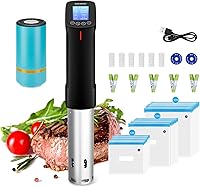
How to Sous Vide Steak With an Anova
Set your Anova to the doneness temperature, bag a seasoned steak, and cook it for at least the minimum time, then cool it briefly and sear hard for a crust. The bath does the timing; you control thickness, salt and sear.
On this page (9 sections)
- How do you set up an Anova bath for steak?
- What temperature should you pick for your steak?
- How do you bag and seal a steak for the bath?
- How long does a steak need in the bath?
- How do you finish a sous vide steak with a good crust?
- What safety rules matter with sous vide steak?
- Which gear makes steak night easier and cleaner?
- How do you plan cook times and sear steps so dinner lands on time?
- How do you get consistent results every time?
Set your Anova to the doneness temperature, bag a seasoned steak, and cook it for at least the minimum time, then cool it briefly and sear hard for a crust. The bath does the timing; you control thickness, salt and sear.
This is the practical version of anova sous vide recipes steak, where the water temperature is the recipe and the clock only sets the minimum.
How do you set up an Anova bath for steak?
Fill a pot or container with enough water to cover the meat and clip the cooker so it sits above the bottom. The Anova Precision Cooker 3.0 has an adjustable clamp that fits most pots deep enough for its minimum water depth.
Set the target temperature on the two-line touch screen, or send it from the free Anova app over WiFi. The cooker runs 1100 watts and holds a temperature range from 32°F to 197°F, which covers every steak setting.
Give the bath 10 to 15 minutes to settle before bagging. A covered container loses less heat on longer cooks.
The third generation moved to dual band WiFi for steadier connectivity than the earlier model, which matters when you walk away after sending a temperature. The removable stainless steel skirt twists off for cleaning, by hand or in the dishwasher.
What temperature should you pick for your steak?
Pick the doneness temperature first, then look up the minimum time for your steak's thickness. That single step replaces guesswork with a repeatable number.
Medium-rare sits near 130°F, medium near 140°F, and medium-well near 150°F. Each step of 10°F changes the texture more than a minute of extra time does.
Our sous vide steak temperature guide lists the full range and the time each one needs for common cuts.
Season simply at first: salt and pepper on both sides. Add garlic, herbs or butter only if you plan to use the bag juices for a sauce.
The Anova app is free and lets you set time and temperature from the phone. A paid subscription runs 1 dollars.99 a month or 9 dollars.99 a year with a two week free trial, and it adds chef recipes plus saved cook history.
For steak, the free app plus the temperature guide here is usually enough.
How do you bag and seal a steak for the bath?
Use a vacuum sealer or a freezer-style zipper bag with the water displacement method, and keep the meat flat so it cooks evenly. Air pockets insulate the surface and slow the center.
Salt the steak before bagging if you like the seasoning to carry through. A dry rub works well; wet marinades thin the juices and can leak.
Lower the bag slowly into the water so the air escapes. Our guide on whether you can sous vide in Ziploc bags covers which bags work and how to clip them.
Bagging sub-steps that prevent floating
Keep the zipper well above the waterline when you lower the bag. A clip on the rim holds the top edge in place, and the meat stays under the surface.
Leave space around each steak. Two steaks stacked in one bag cook unevenly, so bag them side by side.
How long does a steak need in the bath?
Cook a 1-inch steak for at least 1 hour, and add time for thickness. The minimum depends on how long the center takes to reach the bath temperature.
A 1.5-inch steak needs about 2 hours, and a 2-inch steak closer to 2.5 to 3 hours at the same setting. Thin cutlets can be ready in 45 minutes to 1 hour.
Frozen steaks need roughly half again the time. There's no need to thaw overnight; the bath handles it.
Past the minimum, texture softens, so keep an eye on the clock. Our post on whether you can sous vide for too long explains where the limits sit.
The clock is a floor, not a target. Once the center reaches the bath temperature, extra time mostly changes texture, which is why a 1-inch steak has a comfortable buffer while a 2-inch steak needs the longer figure first.
How do you finish a sous vide steak with a good crust?
Dry the steak, get the pan or torch very hot, and sear for less than 2 minutes a side. A wet surface steams instead of browning.
Pat the meat dry with paper towels and let it rest uncovered for 2 to 3 minutes. Then choose your method: a cast iron pan with a high-smoke-point oil, a chimney starter, or a torch.
The Iwatani PRO2 puts out a flame up to 2700°F with one-touch piezo ignition and an adjustable flame shape. It adds char without heating the inside again, and the stabilizing plate lets it stand safely on the counter between passes.
Butane fuel is not included, so buy a can before steak night. The same torch browns meringues and pastry tops and makes the sugar crust on crème brûlée.
Our guide to the best way to sear a sous vide steak compares pan, grill and torch results in detail.
What safety rules matter with sous vide steak?
Keep the cook time inside safe limits for the temperature you chose, and hold cooked steak above 130°F until serving. Below that, bacteria can multiply over long cooks.
For a quick rule, cook steaks at 130°F or above, and use the minimum times a reputable source gives for your thickness.
Ice-bath the bag if you plan to sear later, and refrigerate within 2 hours. Reheat gently in a 130°F bath before finishing.
Never let the bag float above the waterline, and keep the cooker's cord dry. The 120 volt cooker should plug into a grounded outlet, away from the counter's edge.
Which gear makes steak night easier and cleaner?
A dedicated container, a reliable sealer and a quick-read thermometer cover most of the job. None of them changes the recipe, but each removes a small failure point.
The EVERIE 12 Qt container has a thicker split-hinge lid that reduces evaporation and lets you check the steak without lifting the whole cover. It fits the Anova Precision Cooker 3.0, and the container is NSF approved.
The lid is food safe but not NSF approved. That split matters if you care about the certification on the part that touches the water versus the part that sits on top.
Fitting the container to your cooker
The 12 quart size suits steaks, chicken breasts, pork chops, eggs, vegetables and jars. It is easier than clipping a cooker to a random pot wrapped in plastic.
Check the fit list before buying. The container works with the Anova Nano 750W and 800W, the Anova Pro models and the Anova Mini 850W, but it does not fit the old Anova Bluetooth or WiFi models.
The Instant Pot opening may be slightly larger, so the fit is not as tight.
The flip-open hinge means you can top up water during a long cook without lifting the whole cover. A dedicated container also gives you a stable base, which is safer than balancing a pot on a crowded counter.
Small kitchens can clip the cooker to the pot they already own. The Anova's stated capacity is 16 liters, enough water for several smaller cuts at once.
How do you plan cook times and sear steps so dinner lands on time?
Work backward from the table: start the bath, bag the steak, and add the minimum cook time plus 10 minutes for searing. Anova sous vide recipes for steak are mostly scheduling.
Set the cooker 20 minutes before you plan to bag. Cook the steak through its minimum plus up to 30 minutes of buffer; the extra time is rarely a problem within the safe window.
When the timer ends, dry, sear, and serve. A 1-inch steak from fridge to plate fits in about 90 minutes.
Sous vide also suits ribeye, strip, flank for tacos, and thick filets. Adjust time by thickness, not by cut, so a thin flank lands near the short end while a thick filet needs the longer figure.
Keep the sear setup ready before the bath ends. A hot pan or a lit torch waiting on the counter turns a 2 minute sear into a smooth final step.
How do you get consistent results every time?
Write down the temperature, thickness and total time for each steak, then repeat the best one. Consistency comes from a fixed bath and a fixed clock.
Keep the bath covered, use one bag per steak unless they fit flat, and don't crowd the water. Note the cut too, since a lean flank and a fatty ribeye at the same thickness behave differently.
Clean the cooker's skirt after steak nights. Fat and seasoning on the stainless steel come off easier while still soft.
For anova sous vide recipes steak this simple, the bath does the work and the sear adds the finish. Start with 130°F and 1 hour for a 1-inch steak, then adjust by a few degrees rather than by guesswork.
Frequently asked questions
What temperature should I set an Anova to for medium-rare steak?
Set the bath to 130°F for medium-rare and cook a 1-inch steak for at least 1 hour. Thicker steaks need longer for the center to reach the bath, while thin ones can go shorter; the water temperature, not the clock, sets doneness.
Can you cook steak from frozen sous vide?
Yes. Add about 50 percent to the cook time for a frozen steak, and use a thermometer to confirm the center is at your target before serving.
Seasoning sticks better after the surface thaws, so salt it once the steak is no longer rock hard.
Do you need to rest a sous vide steak?
No long rest is needed after the bath, because the meat is already at your target temperature. After searing, a 1 to 2 minute rest on a warm plate helps slice cleanly, but skip the 10 minute rest you would give a grilled steak.
Can you sous vide steak in a Ziploc bag?
Yes, if the bag is a freezer-style zipper bag and you use the water displacement method to push out air. Check the seal, keep the zipper above the waterline, and use a container clip so the bag does not float.
How long can a steak stay in an Anova water bath?
Most steaks are best between the minimum time and 4 hours. Pasteurized cooks at lower temperatures can run longer, but texture softens after hours in the bath, so check the limits before leaving it overnight.